
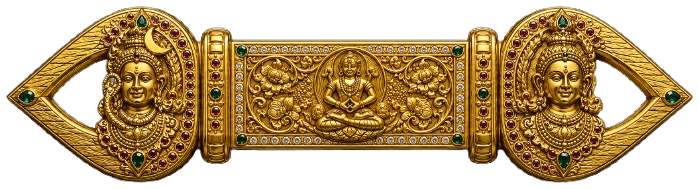
Kho Boonak (खो बूणक, Kho Būṇak) is the third of the four currents of Kopokhojaa. Its colloquial form is Kho Boon. After Siddha Dharma was founded the Siddhas renamed it Kalpa Dharma.
The word Kho means subtle, the subtle power.
Section 01
What this current was
Kho Boonak was the current of the unseen. Its people believed in the invisible, and specifically in what the tradition calls the invisible authority: that every power of a high order is not visible, and that the gods and goddesses, and Ishwar himself, belong to the subtle world rather than to this one.
Out of that comes the claim this current is really known by. Whatever we can see, whatever is visible, is a lost world, a designed illusion, and it was designed by those same subtle powers, to keep us in delusion.
And there is a reason we are in it. We committed sins, we committed crimes, and so we were put into this kind of jail, this prison. The world is the prison.
The current then follows that thought all the way through, using the prison as an argument rather than as a figure of speech. If a man is locked up, and you give him something good, something to make him happy, he may become happy for a short while. Perhaps not even happy; perhaps he only smiles. But in a jail nothing is happiness, and even a good meal is a delusion, because when the meal is finished he goes back into the jail.
Therefore, they said, there is no absolute happiness here and no absolute joy. Whatever the source of happiness is, from wherever in this world joy is arriving, all of it has a limited age. It has a fixed time. One should not mistake this for pessimism about particular pleasures, for it is a structural claim: pleasant things here are real, and they are also, without exception, temporary by design.
The method of the current was the shared Kopokhojaa one, with its own character. The kula gurus of Kho Boonak went into samādhi, into that trance, and connected there with some invisible authority, some subtle great power. That power would then come inside the kula guru, one at a time, a single great power entering him, and whatever that power was able to give, it would give at that time. Sometimes they prayed that the power should grant them its darshan, and the tradition holds that it did.
Section 02
Its major philosophies
Kho Boonak carries the word for the subtle in its name, and its whole thinking is about what cannot be seen.
The invisible is the real order of causes. Worship goes to what cannot be seen, because agency belongs there. What appears is downstream of what acts. Nobody here claimed the visible is unreal, only that it is the effect and never the cause.
The world, on this account, is a made confinement rather than an accident. That is unusual even among traditions that call the world illusory, because there is nothing accidental in it and no fall. The place was built for the purpose it serves, by powers who knew what they were doing, and we are in it for cause.
Pleasure belongs to the design. Worldly joys are not merely brief; they are part of the machinery, present to keep an illusion intact, and the jail carries the whole weight of this. The good meal is a feature of the prison, not a break from it.
Every source of happiness, they said, has a fixed age, and the current states that as a general law and not as an observation about particular pleasures.
Subtlety, meanwhile, is graded and can be ascended. The gurus reached higher subtle powers, which means the unseen is ranked rather than uniform, and that the practice had an upward direction in it.
Knowledge arrives by entry rather than by inference. The power comes inside the guru and answers from within him. As in the other currents the epistemology runs through contact, and here through one power at a time.
Section 03
Its beliefs and articles of faith
The positions a person of Kho Boonak stood on:
- Every power of a high order is invisible, and the gods, the goddesses and Ishwar belong to the subtle world.
- Whatever is visible is a lost world, a designed illusion.
- It is a prison, entered on account of our own sins and crimes.
- There is no absolute happiness here, and every source of joy in this world has a fixed and limited age.
- Pleasant things function to maintain the delusion rather than to relieve it.
- Subtle powers are ranked, and the higher ones can be reached.
- The kula guru in samādhi is entered by one such power at a time, which answers and gives what it is able to give.
- Darshan could be asked of them, and was granted.
- Clear sight about the nature of the place is accuracy rather than despair, and it is where practice begins.
- Names marked the affiliation: Mahasiddha Lal Nath in another current was Mahasiddha Lal Kho in this one.
Section 04
Its symbol
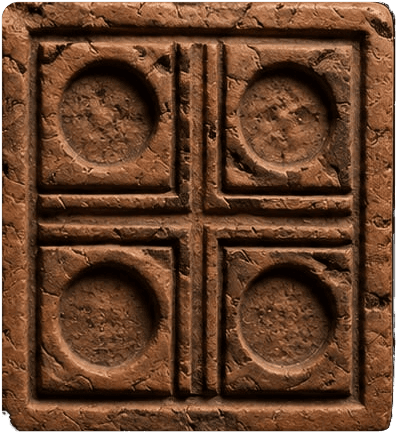
Four boxes.
Four boxes are named as the mark of Kho Boonak, one of the four that combine into the Kopokhojaa mark. The tradition has set down no public reading of them, so this page offers none. Their exact form, whether the four are separated, adjoining or nested, awaits the Peeth's own word.
Section 05
The gods and goddesses of Kho Boonak
Reserved for a future entry from the tradition's record.
Section 06
Kho Boonak, read now
Pessimism is the easy misreading of this current. Kho Boonak never says that life is miserable. Its claim is stranger and more uncomfortable than that: the pleasant parts are doing a job, and the job is to stop you noticing where you are.
The objection to calling the world a prison is obvious enough. There is real joy in it, and a prison has no joy. Kho Boonak answers that a prison with no comforts would be recognised instantly, and would therefore fail as a prison, for the good meal is what makes the sentence tolerable, and a tolerable sentence is one nobody tunnels out of. So the very evidence people cite against the doctrine turns into its strongest support. Accept the conclusion or refuse it, but this is not lazy thinking.
Modern equivalents will suggest themselves here, and one has to handle them with care. There is the simulation, and the whole current vocabulary of engineered distraction, the feed built to keep you scrolling, the comfort designed by someone who profits from your staying put. The resemblance is close enough to be useful and not close enough to be trusted. Kho Boonak's world is a made place with a purpose, made by powers this tradition considers divine, and we are in it on account of our own conduct, whereas the modern versions describe a deception with nobody behind it and no reason for it. Kho Boonak's confinement is just, and that is precisely what a conspiracy is not, which puts this current closer to a courtroom than to a plot.
What survives without accepting any of the metaphysics is the discipline of attention it asks for. Most traditions that begin from suffering ask you to examine your pain. This one asks you to examine your contentment, and to ask what it is for and how long it is built to last. Being suspicious of what hurts is easy. Staying clear-eyed about what soothes you, while it is soothing you, takes considerably more.
A summary of this current hides the warmth in it. Its people were never instructed to refuse the good meal. They were told what it was. Clear sight in a hard place, by this current's reckoning, is worth more than comfort in it.