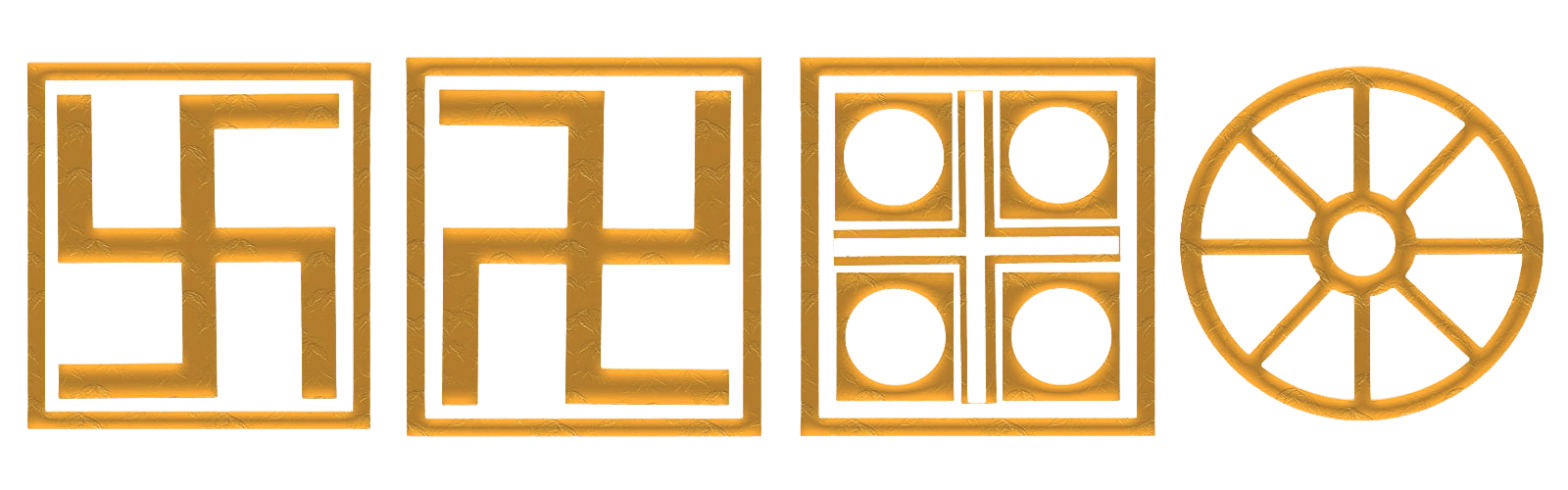
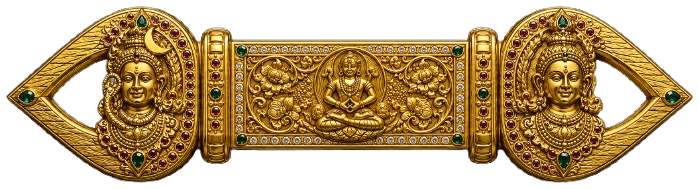
Deva Dharma (देव धर्म, Deva Dharma) is the first of the five dharmas of Siddha Dharma. Its other name in the tradition is Pratīkopāsanā (प्रतीकोपासना), the worship of Ishwar through the pratīka, the visible form.
The word says what it is. Deva is the devatā, the deity, and dharma is a way. Deva Dharma is the way of the gods and goddesses, and of the people who live with them.
Section 01
What this dharma is
Deva Dharma approaches Ishwar through what can be seen. The devi-devatas, the mūrti, the yantra, the symbol, the deity's seat in the village and the deity's day in the year, the mask that is brought out and the chariot that is carried: all of these are pratīka, forms through which the one who is beyond form makes himself available to people who have hands and eyes. The form is the door. Siddha Dharma holds that the seeker reaches Ishwar through these forms in a way that is tangible and accessible, and that what carries him across is devotion, bhakti.
Anyone who has walked through the valleys of the Himalaya has seen this way of worship at work, in the village deity's seat, the mask, the chariot, the day in the year when the deity comes out. Siddha Dharma counts the worship of Ishwar in form as a complete dharma in its own right, one of the five roads, and never as a lesser thing.
Section 02
Its place among the five
Of the five, Deva Dharma is the one under which the founders gathered the three paths to siddhatva.
When the three great Mahasiddhas of the founding era had each opened a path to siddhatva, and had argued about which was the true one, it was under Deva Dharma that Mahasiddha Koshira Nath gathered all three. Mahasiddha Vyaghravritta Nath's Siddhanta Siddhatva, the path of principle; Mahasiddha Agnivritta Nath's Maya Siddhatva, the path of mastery over illusion; and Koshira Nath's own Mukta Siddhatva, the path of absolute freedom: these were kept, each intact, as Deva-Dharmokta Tri-Siddhatva, the three siddhatvas spoken by Deva Dharma. The victory in debate did not abolish the other two paths. It housed them.
The grantha of Deva Dharma is the Deva Samadhi Tantra. Mahasiddha Koshira Nath wrote it. It is one of the most comprehensive and fundamental granthas of Siddha Dharma, arranged in paṭalas, chapters, and the tradition has published accounts of several of them: the Tejottama Yoga Paṭala, the Tri Siddhatva Paṭala, and the Jeeva Pash Mukti Paṭala, which sets out the jīva, the pāśa that bind it, and the freedom on the other side of them. Whole sadhanas of the Peeth are described as rooted in Deva Dharma, Shiva Kalā among them. And when the Kaulantak Naths of earlier eras consolidated and simplified the old vidhis, they did it, in the tradition's own words, as per Deva Dharma.
Section 03
What its people hold
- Ishwar has form, and the form is not a concession. Through the pratīka, the ritual, the symbol and the image, the seeker is connected to Ishwar in a way that can be touched and lived.
- The devi-devatas come from one source. According to Deva Dharma, as Mahasiddha Koshira Nath states it, all devi-devatas originate from Sumeru and are sent by Bhagwan Shiva for the welfare of beings, and in the month of Pausha they withdraw there into samadhi.
- The dharma reaches into ordinary things. At Kumbha Parva those who follow Deva Dharma take the ritual bath in the complete dhoti, and the tradition records the detail as a mark of who they are.
- Bhakti is a complete path. One does not graduate out of it into something more advanced.
- The path to siddhatva runs through here. The three siddhatvas are held under Deva Dharma, so a seeker in this dharma is on the road that the founders of Siddha Dharma themselves walked.
Section 04
Its granthas and Siddhas
Deva Samadhi Tantra, by Mahasiddha Koshira Nath. The Mukta Siddhatva path stands on it.
The three Mahasiddhas of Tri-Siddhatva: Mahasiddha Vyaghravritta Nath, also called Vyaghrambara Nath; Mahasiddha Agnivritta Nath; Mahasiddha Koshira Nath, also called Kopa Shirsha Nath and Gana Chakra Nath.
Further granthas and Siddhas of this dharma: reserved.
Section 05
Its practices
Reserved for a future entry from the tradition's record.
Section 06
Deva Dharma in a modern frame
A serious scholar will rightly say: a great many reformers, inside India and outside it, made the worship of images the first thing they set out to correct, and a tradition that lists it first is leading with the element it will most often have to defend.
In any case, the people of Deva Dharma have never been embarrassed by the form, and the reason is simple. The form is where the meeting happens. A person can love a deity who has a face and a seat and a day in the year, and can bring that deity his devotion in a way he can touch. Naturally, the one who is beyond all form is also beyond being loved in that way, and so the tradition keeps the form, indeed keeps it first, and keeps the formless too, on the very next page.
There is something else in the placing. Siddha Dharma put its whole architecture of liberation, the three siddhatvas, the debate of the founders, the grantha that came out of it, under the dharma of the village deity and the chariot and the mask. The highest thing and the most ordinary thing got the same roof. Perhaps that is the clearest statement this tradition makes about itself. Or perhaps it is only the Himalaya being honest about where its people actually meet their gods.